
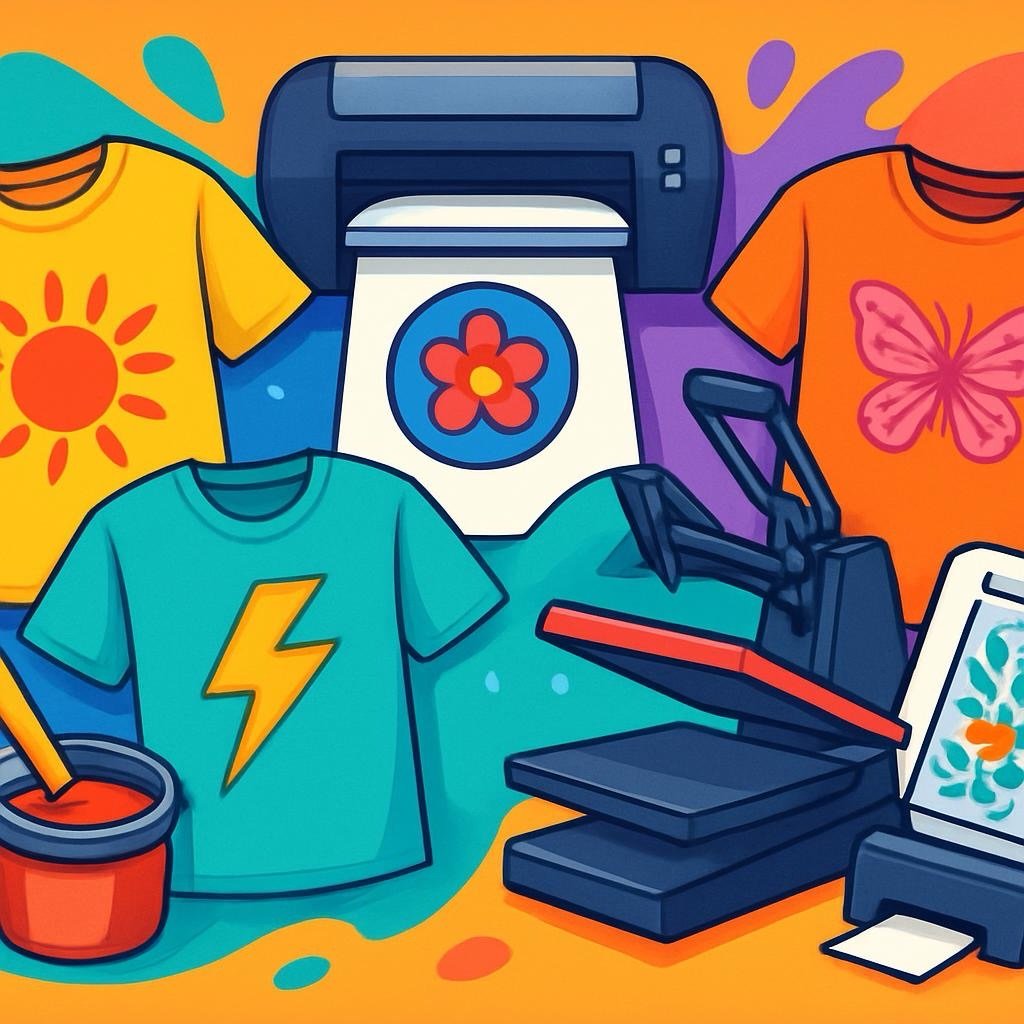

Custom T-shirt printing has become a popular way for individuals and businesses to express creativity, promote brands, or commemorate special events. With various printing techniques available, understanding the strengths and weaknesses of each method is essential for achieving the best results. In this guide, we’ll explore four major printing techniques: screen printing, direct-to-garment (DTG) printing, heat transfer printing, and direct-to-film (DTF) printing, while highlighting when to use each method.
- Screen Printing
Overview
Screen printing is one of the oldest and most popular techniques for custom T-shirt printing. It involves creating a stencil (or screen) for each color in the design and then applying ink through the screen onto the fabric.
Advantages
- Durability: Screen-printed designs are long-lasting and can withstand multiple washes without fading.
- Vibrant Colors: This method allows for bold, vibrant colors that pop on clothing.
- Cost-Effective for Large Runs: When producing bulk orders, screen printing can be more economical, as the setup cost is spread over many shirts.
Disadvantages
- Setup Time: The initial setup for screen printing can be time-consuming, making it less suitable for small orders or designs with many colors.
- Limited Color Depth: Each color requires a separate screen, which can limit the complexity of designs.
When to Use
Screen printing is ideal for large orders, especially for promotional merchandise, team uniforms, or events where durability and vibrant colors are essential. If you have a simple design with few colors, screen printing can provide high-quality results.
- Direct-to-Garment (DTG) Printing
Overview
DTG printing is a relatively newer technique that uses specialized inkjet technology to print directly onto the fabric. This method allows for high-resolution images and complex designs.
Advantages
- Versatility: DTG can handle a wide range of designs, including intricate details and multiple colors without needing separate screens.
- No Minimum Order Requirement: It’s perfect for small orders or one-off designs, making it popular for custom gifts and personal projects.
- Soft Feel: The ink penetrates the fabric, resulting in a soft feel that doesn’t crack or peel.
Disadvantages
- Less Durable: While DTG prints are good quality, they may not be as durable as screen-printed designs, particularly with frequent washing.
- Higher Cost per Unit for Large Runs: For larger quantities, DTG may become more expensive than screen printing due to the individual setup for each shirt.
When to Use
DTG printing is best for small orders, particularly those featuring complex designs with gradients or photographic images. It’s perfect for custom gifts, small business merchandise, or any situation where you want a unique, high-quality print without a large upfront investment.
- Heat Transfer Printing
Overview
Heat transfer printing involves printing a design onto a special transfer paper and then applying heat and pressure to transfer the ink onto the fabric. This method can be done using a home iron or a professional heat press.
Advantages
- Ease of Use: Heat transfer printing is accessible for beginners and can be done at home with minimal equipment.
- Color Variety: You can use a wide range of colors and details, making it perfect for vibrant designs.
- Quick Turnaround: This method allows for quick production times, especially for small runs.
Disadvantages
- Durability Concerns: Heat transfer prints may peel or crack over time, especially if not applied correctly.
- Feel of the Print: The transfer may feel heavier or less breathable than other methods, which some wearers may find uncomfortable.
When to Use
Heat transfer printing is ideal for small batches, personal projects, or custom T-shirts for events where quick turnaround times are needed. It’s also a great option for hobbyists and those experimenting with custom designs.
- Direct-to-Film (DTF) Printing
Overview
Direct-to-film (DTF) printing is an innovative technique that prints designs onto a special film which is then transferred to the fabric using heat. This method combines elements of both DTG and heat transfer printing.
Advantages
- High Detail and Vibrant Colors: DTF allows for intricate designs and a wide range of colors, similar to DTG.
- Versatility on Various Fabrics: It can be applied to different materials, including cotton, polyester, and blends, making it highly versatile.
- Durability: DTF prints are known for their durability and resistance to cracking and peeling.
Disadvantages
- Setup and Equipment Costs: While the printing process is quick, the initial equipment investment can be higher than some other methods.
- Learning Curve: There may be a bit of a learning curve for those new to the technique, especially in terms of proper application.
When to Use
DTF printing is suitable for small to medium runs and designs that require high detail and vibrant color. It’s an excellent choice for custom apparel, promotional products, or any situation where versatility and durability are key.
Conclusion
In the world of custom T-shirt printing, choosing the right technique is crucial for achieving the desired results. Screen printing is the go-to for large runs with vibrant colors, DTG printing excels in producing intricate designs for small orders, heat transfer printing offers convenience for quick projects, and DTF printing combines the best of both worlds with versatility and durability. By understanding the strengths and weaknesses of each method, you can make informed decisions that best fit your printing needs, ensuring that your custom T-shirts turn out exactly as you envision. Whether for personal use, promotional purposes, or artistic expression, the right printing technique can make all the difference in the final product.