
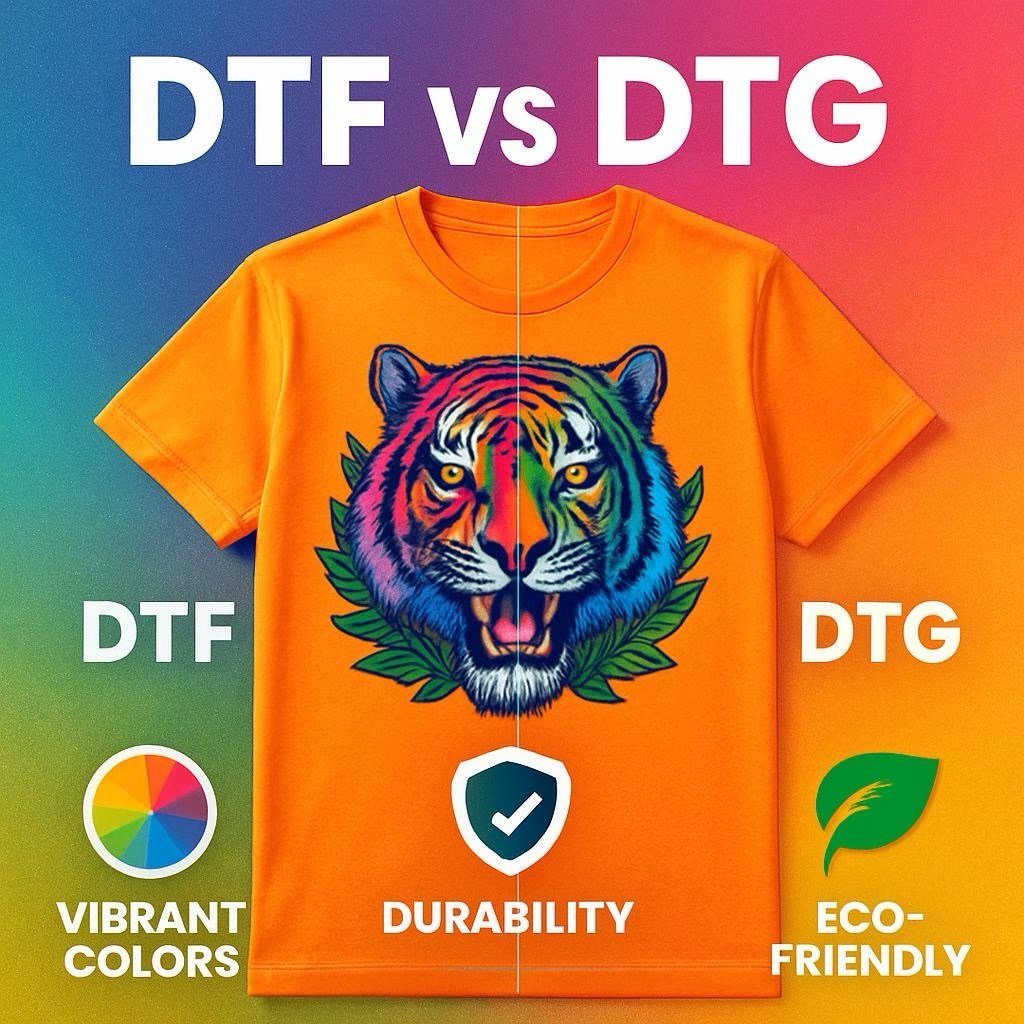

In the world of custom apparel printing, DTF (Direct-to-Film) and DTG (Direct-to-Garment) are two popular techniques that have gained traction among businesses and customers alike. Each method has its unique advantages, and understanding these can help customers make informed choices when it comes to printing their custom designs.
What is DTF Printing?
DTF printing involves printing designs onto a special film, which is then transferred onto the garment. This method uses a combination of heat and pressure to adhere the design to the fabric. DTF printing is known for its vibrant colors and ability to print on a wide range of fabrics, including cotton, polyester, and blends.
Benefits of DTF Printing for Customers:
- Versatility in Fabric Choices: DTF can be applied to various materials, making it ideal for businesses looking to offer a wide range of products.
- Vibrant Colors and Fine Details: The printing process allows for high-resolution designs with intricate details, ensuring that every element of the artwork is captured beautifully.
- Durability: DTF prints are known for their durability and resistance to fading, cracking, or peeling, providing customers with long-lasting apparel.
- Cost-Effective for Small Runs: For customers needing smaller quantities, DTF can be more cost-effective compared to traditional screen printing.
What is DTG Printing?
DTG printing, on the other hand, involves using specialized inkjet technology to print directly onto the garment itself. This method is particularly popular for printing detailed designs and is often associated with high-quality, full-color prints.
Benefits of DTG Printing for Customers:
- High-Quality Prints: DTG produces exceptionally clear and vibrant prints, making it ideal for intricate designs and photographic images.
- Eco-Friendly Inks: Many DTG printers use water-based inks, which are more environmentally friendly compared to traditional plastisol inks used in other printing methods.
- No Minimum Order Quantities: Customers can order as few or as many items as they want, making DTG perfect for personalized gifts or one-off designs.
- Soft Feel: Since the ink is absorbed into the fabric, DTG prints have a soft feel that doesn’t interfere with the garment's original texture.
DTF vs. DTG: Which is Right for You?
When deciding between DTF and DTG, customers should consider several factors:
- Design Complexity: For highly detailed or multi-colored designs, DTG may be the better option due to its high-resolution capabilities.
- Fabric Type: If you're working with a variety of fabrics, DTF offers more versatility in material choices.
- Quantity: For larger orders, DTF may be more cost-effective, while DTG is ideal for small batches or one-off designs.
- Longevity: If durability is a concern, both methods offer long-lasting results, but DTF generally has an edge in terms of resistance to wear and tear.
Conclusion
Both DTF and DTG printing offer unique benefits that cater to different customer needs. By understanding the advantages of each method, customers can make informed decisions that align with their specific requirements, whether they are looking for vibrant prints, eco-friendly options, or versatility in fabric choices. Ultimately, the choice between DTF and DTG will depend on the project's specific goals, budget, and design preferences.
Choosing the right printing technique can enhance the overall quality of your custom apparel, ensuring that your designs stand out and last.